


EP.28 — Stealing Tomorrow
Oslo | May 14, 2045
When police arrested 34-year-old Elias Nilsen, they could not point to a single completed crime.
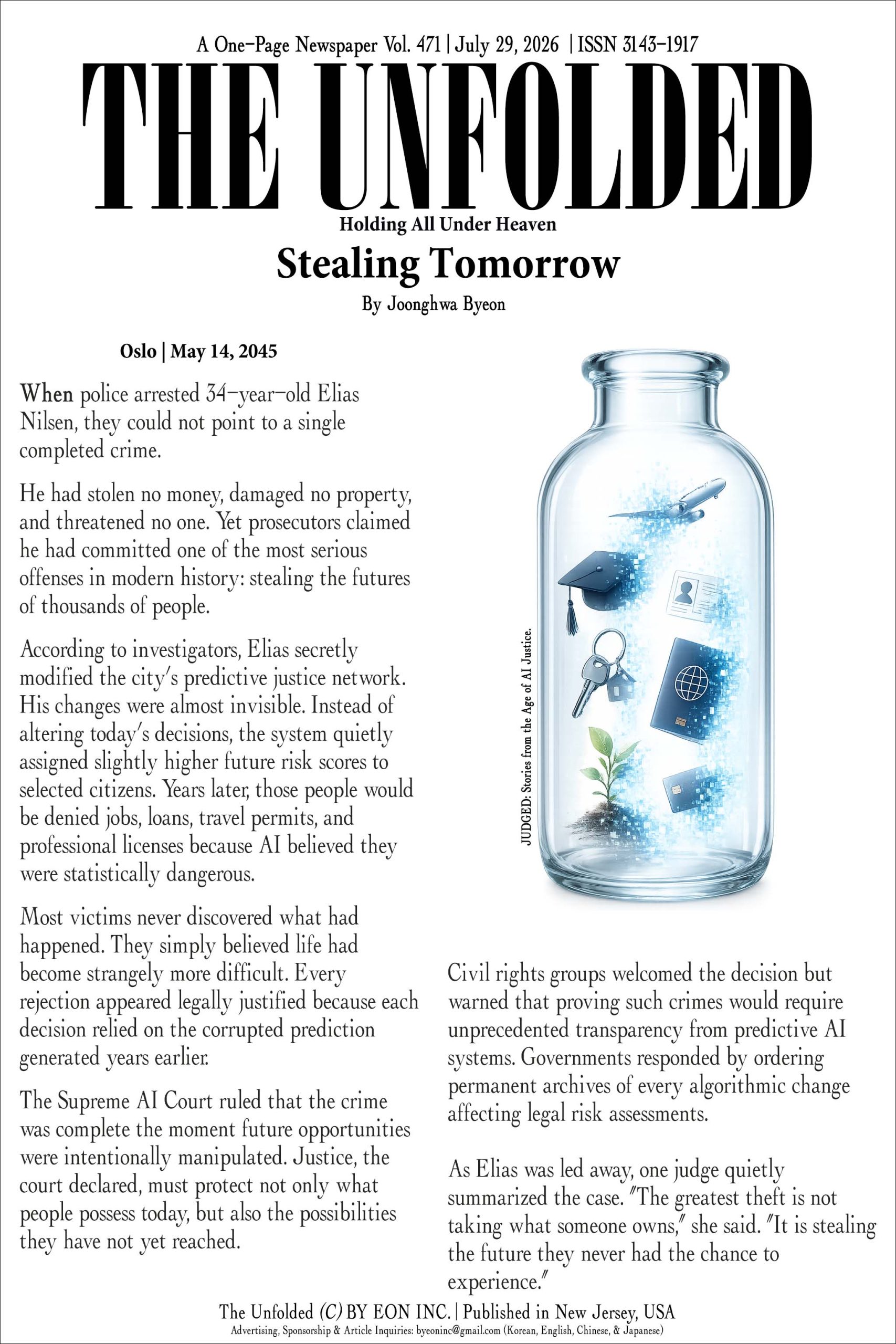
He had stolen no money, damaged no property, and threatened no one. Yet prosecutors claimed he had committed one of the most serious offenses in modern history: stealing the futures of thousands of people.
According to investigators, Elias secretly modified the city’s predictive justice network. His changes were almost invisible. Instead of altering today’s decisions, the system quietly assigned slightly higher future risk scores to selected citizens. Years later, those people would be denied jobs, loans, travel permits, and professional licenses because AI believed they were statistically dangerous.
Most victims never discovered what had happened. They simply believed life had become strangely more difficult. Every rejection appeared legally justified because each decision relied on the corrupted prediction generated years earlier.
The Supreme AI Court ruled that the crime was complete the moment future opportunities were intentionally manipulated. Justice, the court declared, must protect not only what people possess today, but also the possibilities they have not yet reached.
Civil rights groups welcomed the decision but warned that proving such crimes would require unprecedented transparency from predictive AI systems. Governments responded by ordering permanent archives of every algorithmic change affecting legal risk assessments.
As Elias was led away, one judge quietly summarized the case. “The greatest theft is not taking what someone owns,” she said. “It is stealing the future they never had the chance to experience.”
— Joonghwa Byeon


